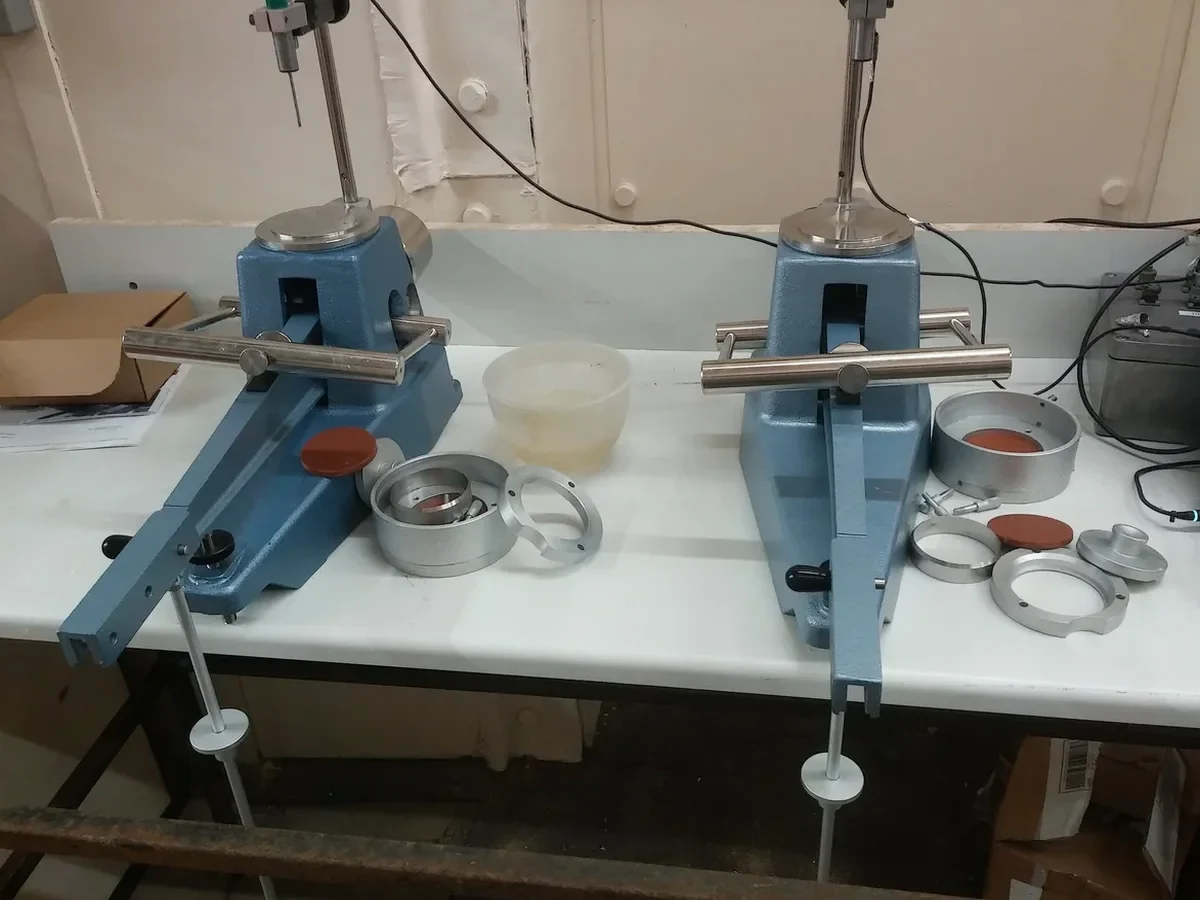
A ground investigation for a new residential development near Pittville Park encountered a stratum of stiff, grey-blue clay at just under two metres depth across the site. The contractor paused excavation to request a full classification suite because the material behaved differently from the weathered Lias Clay they had expected. This type of scenario is common in Cheltenham, where the solid geology transitions between the Charmouth Mudstone Formation and overlying superficial deposits of alluvium along the River Chelt. Our laboratory team receives samples from across the town for Atterberg limits determination, a fundamental index test that quantifies the water contents at which a fine-grained soil changes from a liquid to a plastic and finally to a semi-solid state. The result is a numerical fingerprint that tells the design engineer exactly how sensitive the ground will be to moisture changes during the construction and operational life of a structure. Without this data, assumptions about bearing capacity or shrink-swell potential remain speculative and can lead to costly over-design or, worse, under-design of foundations and retaining elements.
A plasticity index above 30% in Cheltenham clays signals high shrink-swell potential, directly dictating foundation depth requirements.