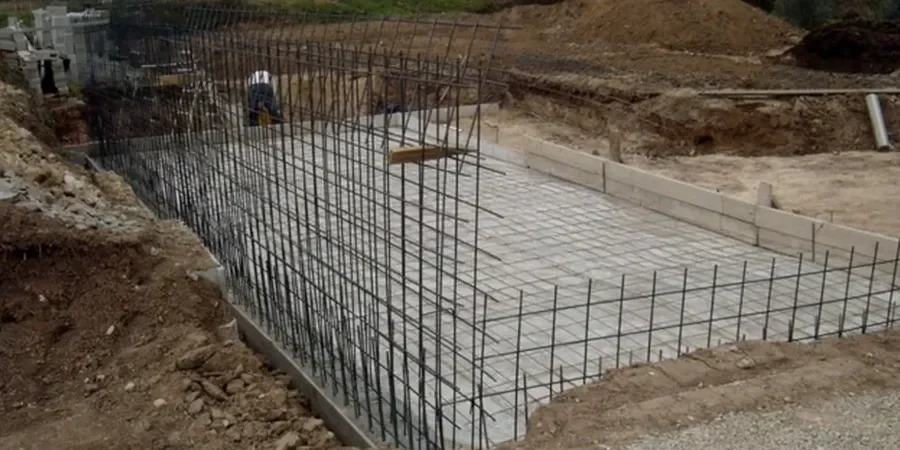
The western edge of Cheltenham sits squarely on the Charmouth Mudstone Formation: a stiff, overconsolidated Lower Lias clay that can swell when wet and shrink dramatically in a dry summer. A standard allowable bearing pressure of 100 kN/m² works for a two-storey masonry house on the gravel terraces near the racecourse, but the same figure will cause trouble on the more plastic clays around Hatherley. That is precisely why a desk study alone cannot replace a rigorous shallow foundation design supported by site-specific ground investigation. We pair the findings from dynamic probing or trial pits with a bearing capacity model that accounts for undrained shear strength, the local water table depth—often within 2 m along the River Chelt corridor—and the serviceability limit state for long-term settlement. The output is a set of dimensioned pad or strip footings sized to keep differential movement below 25 mm, matching the requirements of BS EN 1997-1:2004 and the NHBC Standards Chapter 4.2. When the Client needs a quick start on site, we coordinate the plate load test directly on the formation level to validate the design assumptions before the blinding concrete goes in.
A 25 mm differential settlement limit is not a bureaucratic number; it is the threshold where plasterboard starts to crack and doors stop closing.