GEOTECHNICAL ENGINEERING1
CHELTENHAM
HomeRoadwayFlexible pavement design

Flexible Pavement Design in Cheltenham: Geotechnical Input for Durable Roads

Knowledgeable. Thorough. Resourceful.

LEARN MORE

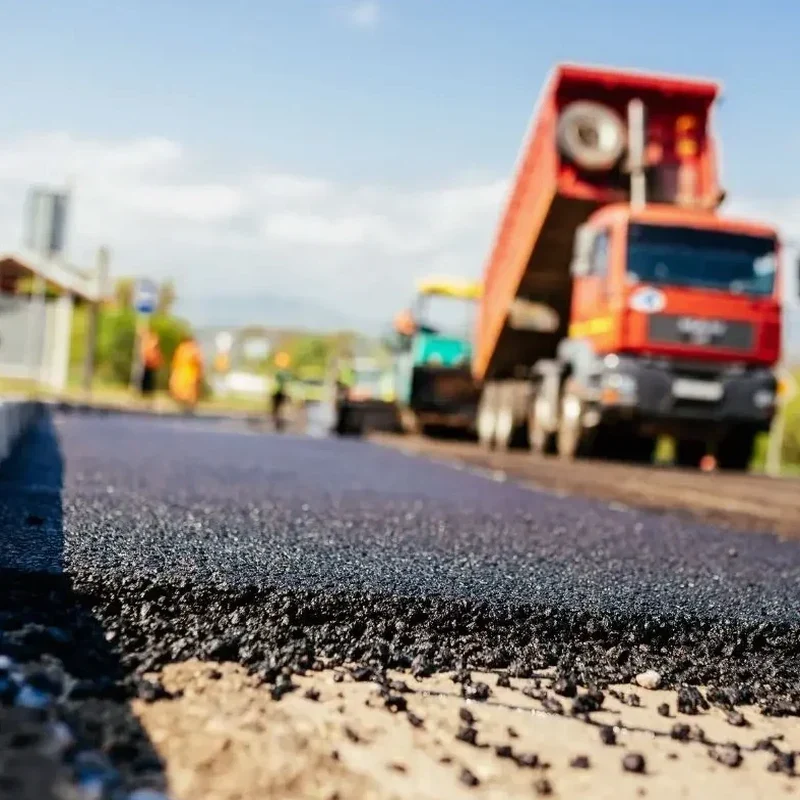
In Cheltenham, we often see that the biggest threat to a new road isn't traffic loading but what sits beneath the surface. The town spreads across Lower Lias clay formations and pockets of Cheltenham sand, and on the western edge you encounter the Cotswold limestone brash. Each of these materials behaves differently under repeated wheel loads, and a flexible pavement design that works on the gravelly outskirts will fail prematurely if copied onto the expansive clays near Pittville. We combine site-specific CBR testing with layered elastic analysis to produce a pavement structure that matches the actual subgrade, not a textbook assumption. Before finalising the formation level, many project teams also commission a CBR road investigation to validate the design modulus across the full alignment, which is particularly useful where the geology transitions within a single site.

Getting the foundation right on Cheltenham's variable clays can double the service life of a flexible pavement before the first structural intervention is needed.

Our service areas

Process and scope

A common mistake we encounter is when contractors treat the subgrade as uniform across the entire carriageway. Cheltenham's drift geology is notoriously patchy: a single residential access road can cross from weathered Charmouth Mudstone into Head deposits within 50 metres. A flexible pavement design that relies on a single CBR value will develop differential rutting at those transitions within the first two winters. Our approach is to map the subgrade variability first using dynamic probing or trial pits, then define pavement zones with distinct layer thicknesses. The bituminous bound layers, typically a DBM base and a thin asphalt surface course, are sized to distribute stress so that the vertical compressive strain at the top of the subgrade stays within the endurance limit specified in the DMRB and local authority adoptable standards.

Key design parameters we control on every Cheltenham project:
  • Subgrade CBR: measured in-situ after proof rolling, not just estimated from the soak test.
  • Foundation class: capping and sub-base thickness derived from the long-term CBR, following Series 600 of the Specification for Highway Works.
  • Asphalt layer coefficients: selected to match the design traffic in million standard axles (msa), with fatigue and deformation resistance verified against BS EN 13108 material specifications.
Flexible Pavement Design in Cheltenham: Geotechnical Input for Durable Roads
Technical reference — Cheltenham

Site-specific factors

Cheltenham's expansion during the Regency period and the post-war housing boom left a legacy of made ground and undocumented fill across many development sites. When a flexible pavement is designed over these materials without investigation, the risk isn't just rutting; it is differential settlement that cracks the bound layers and lets water into the pavement structure. The wet winters in Gloucestershire, with annual rainfall around 700 mm, accelerate the damage once the surface seal is broken. We insist on a geotechnical desk study before the pavement design starts, cross-referencing historical maps with the British Geological Survey 1:50,000 sheet for the district. Where soft spots or old ponds are identified, we recommend either a deeper capping layer stabilised with lime or a geogrid-reinforced granular platform to bridge the weak zones. The extra cost at construction stage is trivial compared with the maintenance liability of a failed road adopted by the county council.

Need a geotechnical assessment?

Reply within 24h.

Email: contact@geotechnical-engineering1.com

Applicable standards

BS EN 1997-2:2007 (Eurocode 7 – Ground investigation and testing), DMRB CD 226 (Design for new pavement construction), Series 600 – Specification for Highway Works (Earthworks and Pavement Foundations), BS EN 13108 (Bituminous mixtures – Material specifications)

Typical values

ParameterTypical value
Design traffic (msa)0.5 to >80 msa
Subgrade CBR target2% to 15% (site-specific)
Foundation classClass 1 to Class 4
Asphalt base courseDBM / HDM (BS EN 13108)
Surface courseAC surf or SMA (local authority spec)
Sub-base typeType 1 / Type 3 unbound or HBM
Design life20 to 40 years (standard)

Frequently asked questions

How much does a flexible pavement design for a Cheltenham project cost?

For a typical residential access road or small commercial development in Cheltenham, the combined site investigation and pavement design package falls between £1,400 and £4,680. The final figure depends on the length of road, the number of CBR test locations required to capture subgrade variability, and whether laboratory testing of the asphalt materials is included.

What is the difference between a flexible and a rigid pavement?

A flexible pavement distributes traffic loads through the granular layers and the asphalt, relying on the bearing capacity of the subgrade. A rigid pavement uses the structural stiffness of the concrete slab to span weak spots. In Cheltenham, flexible pavements are more common for estate roads and highways because they are easier to stage-construct and maintain, but the choice depends on the subgrade conditions and the design traffic.

Which standards do you follow for flexible pavement design in the UK?

We follow the Design Manual for Roads and Bridges (DMRB) CD 226 for the structural design, and the Specification for Highway Works Series 600 and 800 for earthworks and materials. The ground investigation that feeds into the design is carried out in accordance with BS EN 1997-2 and BS 5930, which are the recognised standards for geotechnical investigation in the United Kingdom.

Do you handle the Section 38 adoption process for Gloucestershire County Council?

We provide the technical pavement design package and supporting geotechnical report that form part of a Section 38 or Section 278 submission. While we do not manage the legal agreement with the highway authority, our documentation is prepared to meet Gloucestershire County Council's adoptable standards, which helps the developer's consulting engineer move the approval forward without technical queries.

Location and service area

We serve projects in Cheltenham and surrounding areas. More info.

View larger map