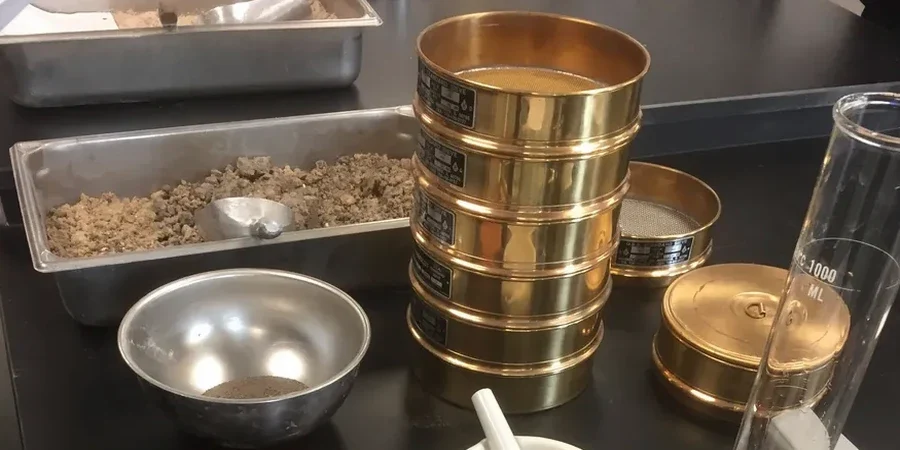
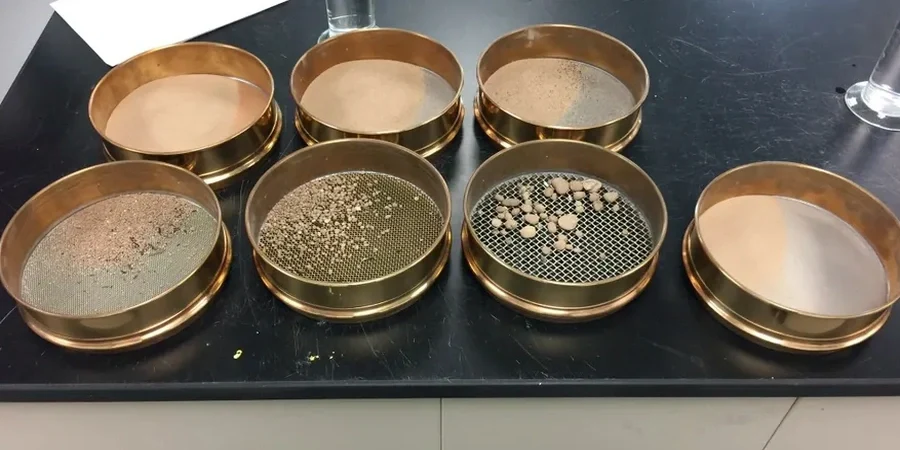
In Cheltenham, many site investigations hit a snag when the first trial pit reveals a mix of Lias clay and sandy brash from the Cotswold limestone. You see a soil that is neither fully cohesive nor granular. The grain size analysis (sieve and hydrometer) cuts through that ambiguity. A full particle distribution curve reveals the dominant fraction, the fines content and the D10/D30/D60 diameters needed for grading descriptors. With BS 5930:2015 as the backbone, the laboratory runs wet sieving on the coarse fraction and a sedimentation hydrometer test on material passing the 63μm sieve. The output is a single curve that defines the soil classification and feeds directly into permeability estimates and filter design. For sites near the River Chelt, where alluvial silts complicate the stratigraphy, this test becomes essential before any foundation or drainage decision.
A single grain size curve replaces guesswork with numbers: well graded, poorly graded or gap graded — each term carries precise engineering consequences.